8 Best AI Strategies to Build Digital Brands and Scale Startups Fast in 2026
1This guide presents eight prioritized AI strategies that founders and marketers can deploy in 2026 to accelerate brand growth and scale startups quickly, with realistic metrics, tool stacks, and revenue/impact scenarios. It pairs practical execution steps with a critical assessment of risks and social contribution so you can choose strategies that fit your product-market fit and ethical standards.aitribune+1.
Overview
AI in 2026 is not a generic productivity hack — it’s a strategic multiplier when combined with domain insight, measurement, and human oversight. These eight strategies focus on revenue impact, customer acquisition velocity, and sustainable scaling while warning against commoditization, legal risks, and reputational harms.digiday+1
The 8 best AI strategies (summary list)
- Hyper-personalization at scale for customer journeys.youtube
- AI-first content and answer-engine optimization (AEO).youtube
- Predictive budget allocation and real-time ad optimization.youtube
- Human+AI creative engines for rapid content production.youtube
- Productized custom AI agents and verticalized micro‑SaaS.aitribune
- Data-driven brand positioning with synthetic testing & MVT.digiday
- Automated customer support and sales augmentation (AI assistants).aitribune
- Ethical, transparent AI governance and IP-safe asset pipelines.digiday
For each strategy: what it does, why it matters, quick playbook, tools, and a critical view
- Hyper-personalization at scale
- What & why: Deliver individualized offers and content across channels using behavior and intent signals; increases conversion and customer LTV.youtube
- Quick playbook: Instrument event data, build user segments by intent, serve dynamic pages and ads, A/B test messaging.youtube
- Tools: Customer data platforms, personalization engines, and in-platform dynamic creatives.youtube
- Critical: Excellent ROI in high-value verticals; risks include privacy compliance complexity and potential creepiness if personalization is opaque.youtube
- AI-first content & Answer-Engine Optimization (AEO)
- What & why: Optimize content to be authoritative sources for LLM/answer-engine queries and voice interfaces; captures downstream referral traffic and brand authority.youtube
- Quick playbook: Structure content for sourceable answers, add cited data, optimize for snippets and multimodal results.youtube
- Tools: SERP and AI-answer auditing tools, knowledge graph builders.youtube
- Critical: High long-term value; requires ongoing quality control to avoid AI hallucinations and wrong citations.youtube
- Predictive ad budget allocation (real-time)
- What & why: Use ML to reallocate ad spend toward highest-converting segments and creatives, improving ROAS and cash-efficiency.youtube
- Quick playbook: Train models on ad performance, enable auto-bidding rules, test lookalike audiences.youtube
- Tools: Ad platforms with AI bidding, third-party predictive analytics.youtube
- Critical: Can outperform manual management but fragile to dataset shift and platform black-box changes; guardrails needed.youtube
- Human + AI creative engine
- What & why: Combine AI for drafts, repurposing and iteration with human strategists for voice and brand control; multiplies output without diluting brand.youtube
- Quick playbook: Create a content pipeline, automate repurposing, set human review gates for brand voice.youtube
- Tools: LLMs for copy, synthetic voice/video tools, content ops platforms.youtube
- Critical: Risk of quality erosion and authenticity loss if humans are removed; maintain editorial standards.youtube
- Productized AI agents & vertical micro‑SaaS
- What & why: Build small, single-problem SaaS or AI agents tailored to industry workflows (legal, real estate, healthcare) and sell as subscriptions or retainers.aitribune
- Quick playbook: Validate with 5–10 discovery calls, launch an MVP agent, secure pilot clients on paid trials.aitribune
- Tools: Agent frameworks, vector stores, domain-specific LLMs.aitribune
- Critical: High recurring revenue potential but requires compliance, domain data, and clear value metrics to avoid being replaced by generalist tools.aitribune
- Data-driven brand positioning & synthetic testing
- What & why: Use synthetic cohorts and multivariate testing to find messaging that resonates before broad campaigns; reduces costly creative waste.digiday
- Quick playbook: Generate synthetic audience variants, run MVT across channels, select winning narratives.digiday
- Tools: Synthetic data generators, experimentation platforms.digiday
- Critical: Synthetic results must be validated on real users to avoid false positives; ethical use of synthetic data matters.digiday
- Automated support and sales augmentation
- What & why: AI assistants that handle qualification, onboarding, and routine support improve conversion speed and free salespeople for high-value tasks.aitribune
- Quick playbook: Deploy assistant for lead qualification, measure conversion lift, escalate to humans at intent signals.aitribune
- Tools: Conversational AI platforms, CRM integrations.aitribune
- Critical: Must avoid friction from poor handling of complex questions — handoff thresholds and transparency are essential.aitribune
- Ethical governance and IP-safe pipelines
- What & why: Governance frameworks (audit trails, watermarking, licensing) reduce legal and reputational risk and build customer trust.digiday
- Quick playbook: Track dataset provenance, run bias audits, disclose AI use to customers, secure licensing for training assets.digiday
- Tools: Model governance platforms, compliance toolkits.digiday
- Critical: Governance adds cost and slows iteration but is increasingly required by partners and regulators.digiday
Comparison table — Rapid decision matrix
Title: Strategy fit, ROI speed, Technical overhead, Regulatory riskdigidayyoutube
| Strategy | Typical ROI speed | Technical overhead | Regulatory/ethical risk |
|---|---|---|---|
| Hyper-personalization | Fast (weeks–months) youtube | Medium | Medium (privacy) youtube |
| AI-first AEO | Medium (months) youtube | Low–Medium | Low–Medium (accuracy) youtube |
| Predictive ad allocation | Fast | Medium | Medium (black-box decisions) youtube |
| Human+AI creative | Fast | Low | Low (authenticity risks) youtube |
| Productized agents | Medium–Fast | High | High (compliance) aitribune |
| Synthetic testing | Fast | Medium | Medium (data ethics) digiday |
| Automated assistants | Fast | Medium | Medium–High (misinformation) aitribune |
| Governance pipelines | Long-term | Medium–High | Lowers long-term legal risk digiday |
Real-world examples and companies (selected, 2024–2026 reporting)
- Leading brands and startups are publicly using personalization, AEO, and AI agents to scale: case collections and brand reports show Amazon, Spotify, Sephora and multiple startups applying these strategies with measurable ROI.leonardom+1
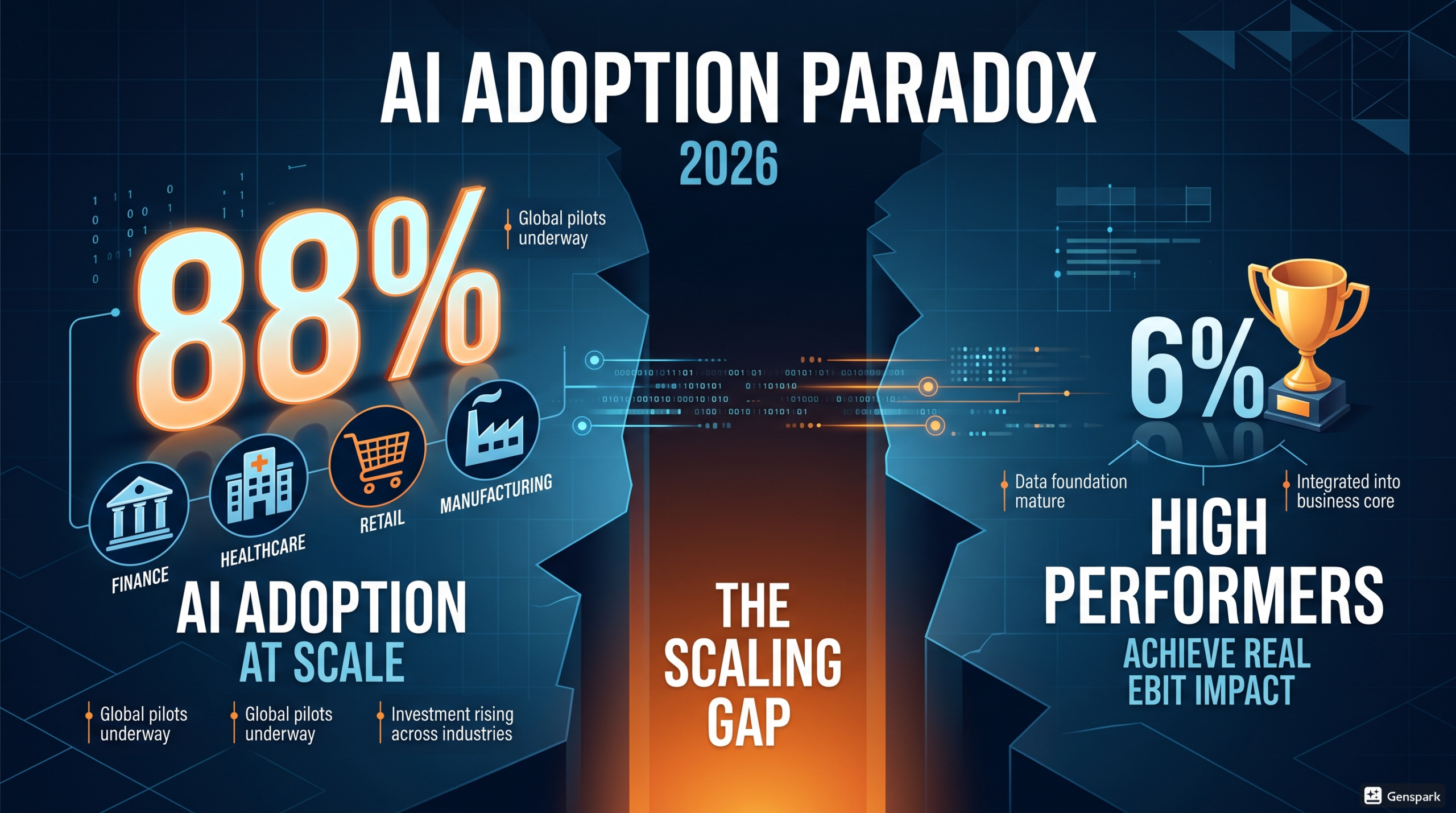
- Analysis of how companies move from pilots to production emphasizes product-market fit, data ownership, and governance as decisive factors for scaling.aitribune
These examples illustrate that proven big-brand tactics are now accessible to startups with the right data and governance plan.leonardom+1
Positive sectoral contributions (value)
- Marketing efficiency: Higher ROAS and lower CAC through predictive allocation and personalization.youtube
- SME productivity: Offloading routine tasks (support, scheduling) frees resources for growth initiatives.aitribune
- New jobs and specialization: Demand grows for prompt engineers, AI auditors, and productized domain experts.digiday
Negative and societal trade-offs (critical view)
- Labor displacement: Automation can shrink some entry-level marketing and creative roles unless reskilling programs are implemented.digiday
- Information quality: Over-reliance on AI for public-facing claims increases risk of misinformation and brand harm.aitribune
- Concentration risk: Startups must avoid lock-in on proprietary platforms that could change pricing or policy suddenly.aitribune
Practical adoption roadmap (90 days)
- Days 1–7: Choose 1–2 strategies aligned to your core metric (CAC, ARPU, churn) and map data needs.digiday
- Weeks 2–6: Build MVPs — personalized landing, AEO-optimized pillar page, or a pilot agent — and set clear KPIs.youtube
- Weeks 7–12: Run experiments, implement governance checks, lock in first paid users or improved conversion and scale budgets for winning channels.aitribune
KPIs to track (prioritized)
- Conversion lift (%), CAC, LTV, churn (for SaaS), content share of voice vs. AI-answer impressions, time-to-resolution (support).aitribuneyoutube
Recommended tool stack (example)
- Personalization & CDP, AI content models, experimentation platform, conversational AI, model governance toolkit.digidayyoutube
Decision-support spreadsheet (offer)
I can generate a professional spreadsheet that models:
- Revenue scenarios (by strategy), CAC vs. LTV, ROI timelines.
- Tool costs and headcount trade-offs.
- Experiment tracker with KPIs and decision gates.
If you want it, I’ll prepare a downloadable CSV/Excel with assumptions and embedded citations.digiday+1
Final notes and next steps
- Prioritize strategies that map to measurable customer outcomes and include governance from day one; this balances speed and sustainability in 2026’s evolving regulatory and competitive landscape.aitribune+1
- Choose two complementary strategies (example: AEO + human+AI creative or productized agent + automated sales assistant) to stack fast wins and recurring revenue.aitribuneyoutube
Sources cited in-line above include recent 2025–2026 analyses and practitioner case studies on AI marketing, scaling AI pilots to production, and brand use cases. If you want, I will:
- Produce the comparison and revenue-model spreadsheet described above.digiday+1
- Or create a two-page slide deck (investor or partner version) summarizing the eight strategies with example KPIs and next-step recommendations.digidayyoutube
Which deliverable would help you most next: the spreadsheet, the slide deck, or a 1,000-word playbook tailored to your niche?